The class this quarter is focused on issues related to global urbanization, the challenges and opportunities it brings with it. As was widely reported this week, 2008 is expected to be the year when half of the world's human population will be living in an urban environment. This is a big deal. It is happening for the first time and it is a big milestone in human history. A milestone in our journey towards what, is the bigger question. Are we headed towards collapse? Or is there a brighter future awaiting us?
Today's cities are resource hogs, hogging food, energy, water and everything in between like there is no tomorrow. To feed the ever increasing needs of cities, food production and distribution today has become a massive global endeavor. The global food supply chain is increasingly dependent on massive amounts of oil, petrochemicals and genetic engineering. Food travels on an average of 2000 miles before it reaches our tables! The food industry has undergone unprecedented consolidations in the last few years to achieve economies of scale. About 10% now control 90% of the market!
Making cities more and more self sustainable is where the challenges and opportunities lie. Localizing resource production and consumption is gaining wider acceptance and popularity in sustainability circles. Think Globally & Act Locally seems to be the new mantra.
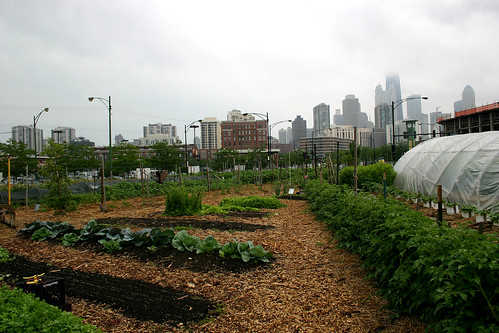
To make a long story short, I did a small project looking at decentralizing and localizing food production and consumption. A bottom-up approach of sorts! A perfect example of how this can work is the urban farm located in the heart of Chicago. It is called the City Farm and it is run by a non profit environment education organization called Chicago Resource Center. They explained to me how they took a vacant 1 acre lot and made it into a very productive organic vegetable farm growing 10,000 pounds of vegetables last year. They supply the produce to several local restaurants and the local community. The organic waste from these restaurants is composted back into the farm. Planting a combination of high intensity and low intensity crops, totaling 55 different varieties, they ensure a continuous availability of vegetables. On any given day, you can walk in and walk out with a bag full of fresh and great tasting vegetables. I have to say the Cilantro was yum! All this on a vacant lot that otherwise would have turned into a dumping ground with rat infestation.

It is estimated that the city has about 8000 such vacant lots. Imagine the good it will do if all it were put to productive use. An even great opportunity is the millions of square feet of rooftops available in Chicago. As of Oct 2006, 1 million square feet of roof is being converted into green roof. That is probably less than 5% of the total available roof space. Green roofing is big in Chicago. There are several city funds promoting it. Just imagine the possibilities if food were to be grown up there! That is exactly the idea Chicago Resource Center plans to promote. What they have done is prove that the concept works. What they will need is leadership from the City of Chicago. The Mayor's office is very supportive of the idea. While there are several funds and initiatives that help, there is no comprehensive policy on food.
Chicago calls itself a green city. I am not sure if it is entirely there yet. One city that is leading the pack is City of Vancouver, Canada. They have chosen to take a holistic approach to urban farming and sustainability in general. They have formed a Food Policy Council, bringing together local, regional and even global stakeholders and formed a comprehensive food policy. Policies are aimed at reducing sprawl, protecting metropolitan farm lands, and providing easy access to farmer's markets. No wonder a majority of Vancouverites eat local food and an impressive 44% of them actually do some sort of urban farming. In case they grow excess food, there are several easy mechanisms to sell or donate them. Local farmer's markets are available all over the city. Vancouver is expected to have 2010 community gardens/farms by the 2010 Olympics opening! The ingredients for success: leadership from the local government, consumer awareness and community involvement.
City of Portland looked at what worked in Vancouver and in Chicago. They too have formed a Food Policy Council.

A new kind of food future is possible!
Quote of the day
"To forget how to dig the earth & tend the soil is to forget ourselves" -Mahatma Gandhi